Novel Studies

These are the novels I return to in the classroom, read closely and taught with care. Here you’ll find how I open a book with students, the passages I linger on, and the questions that let a story do its quiet work. Not summaries — ways in.

Watercolor portrait of Cal from East of Eden, thoughtful and conflicted, with the Salinas Valley behind him, evoking timshel — "thou mayest" — and moral choice.
Novel Studies

What Timshel Means in East of Eden: Choice, Freedom, and Moral Responsibility

In East of Eden, John Steinbeck introduces the Hebrew word timshel — “thou mayest” — as a lens for understanding human choice, moral responsibility, and freedom. This reflection explores how the concept resonates not only for characters like Cal but also for educators navigating the classroom.

What Timshel Means in East of Eden: Choice, Freedom, and Moral Responsibility Read Post »

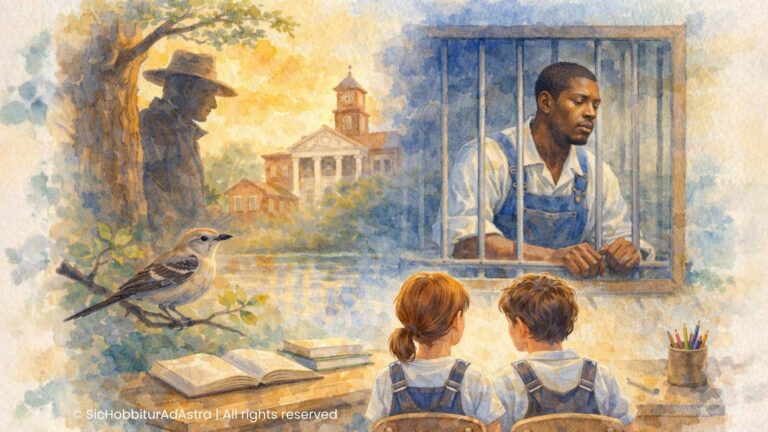
Watercolor illustration of Scout and Jem sitting at a desk in a classroom, observing symbolic representations of Boo Radley behind a tree and Tom Robinson behind bars, with a mockingbird perched nearby.
Novel Studies

To Kill Two Mockingbirds: Stories of Boo Radley and Tom Robinson

“It is a sin to kill a mockingbird,” says Atticus in chapter 10. If you’ve ever had a student exclaim, “Oh, wait, that’s the title! But… what does it mean?”, this article will help you dive deeper into the metaphor, exploring the stories of Boo Radley and Tom Robinson and offering insights for your classroom discussions.

To Kill Two Mockingbirds: Stories of Boo Radley and Tom Robinson Read Post »

Scroll to Top