Character Analysis

A story often turns on a single figure. Here I look closely at the characters my students remember longest — what they want, what they hide, what they teach us — and offer ways to help young readers see them with more than a first glance.

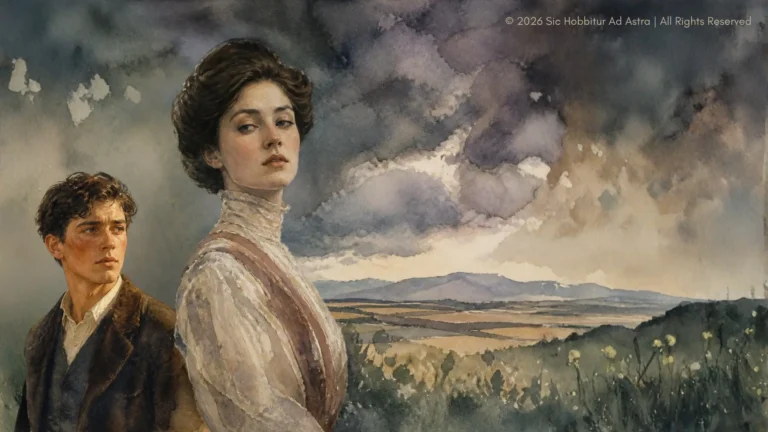
Watercolor portrait of Cathy Ames from East of Eden — serene but cold-eyed — with Cal uneasy behind her under a stormy sky over the Salinas Valley, evoking the theme of evil.
Character Analysis

Cathy Ames and the Mystery of Evil: Understanding One of Literature’s Most Unsettling Characters

Cathy Ames does not invite easy interpretations. In East of Eden, she stands as one of Steinbeck’s most unsettling creations—resisting explanation while quietly reshaping the novel’s moral landscape. This reflection explores her role as a figure of evil, illusion, and moral tension, offering educators a space to engage with one of literature’s most challenging characters.

Cathy Ames and the Mystery of Evil: Understanding One of Literature’s Most Unsettling Characters Read Post »

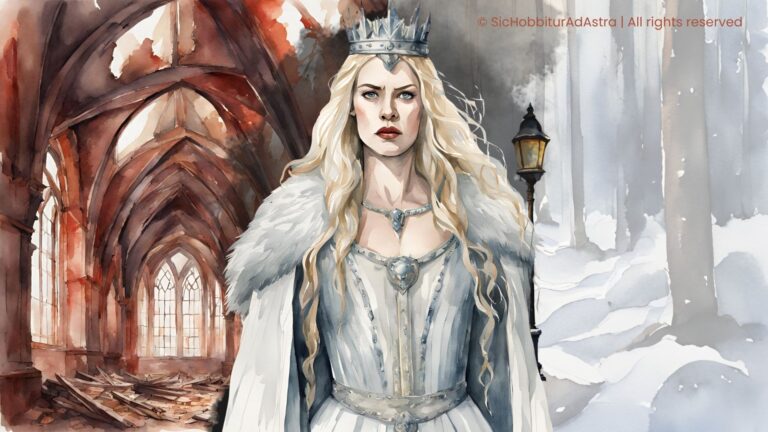
Watercolor illustration of the White Witch in Narnia, with Charn ruins on the left and a snowy Narnia landscape on the right
Character Analysis

The White Witch and the Concept of Tyranny: Teaching Power and Justice Through Fantasy

The White Witch is not simply cruel—she is a tyrant with a theory, one she states aloud to a boy who has just asked how she could destroy a world. This article reads Jadis as a case study in how power exempts itself from the rules, tracing the three ways she escapes judgment across Lewis’s two novels: by argument, by force, and by law.

The White Witch and the Concept of Tyranny: Teaching Power and Justice Through Fantasy Read Post »

Scroll to Top