Chiara

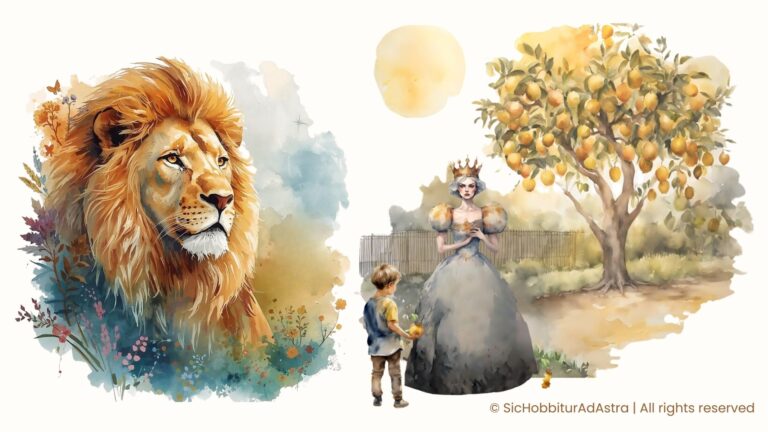
Watercolor illustration showing Aslan singing Narnia into existence on the left, and Digory facing the White Witch in the walled garden on the right, symbolizing creation and moral choice.
Novel Studies

The Magician’s Nephew and the Bible: An Intertextual Comparison

When I read The Magician’s Nephew with my students, they almost always notice echoes of the biblical creation story — and they’re right. In this article I follow three of those echoes: the world sung into being, the naming of the creatures, and the choice in the walled garden — with the questions that open each one up in the classroom.

The Magician’s Nephew and the Bible: An Intertextual Comparison Read Post »

Watercolor painting of C.S. Lewis with snowy Narnia on one side and the Wood Between the Worlds on the other, two arrows above his head pointing to each world, symbolizing the choice of reading order.
Novel Studies

Narnia Reading Order for the Classroom: Publication Order vs Chronological Order

In The Magician’s Nephew, C. S. Lewis wrote the origins of Narnia—yet he wrote them last, five years after The Lion, the Witch and the Wardrobe. This article looks at what that “written later, set first” paradox means for the classroom, and at how the choice between publication and chronological order shapes the way students come to know the series.

Narnia Reading Order for the Classroom: Publication Order vs Chronological Order Read Post »

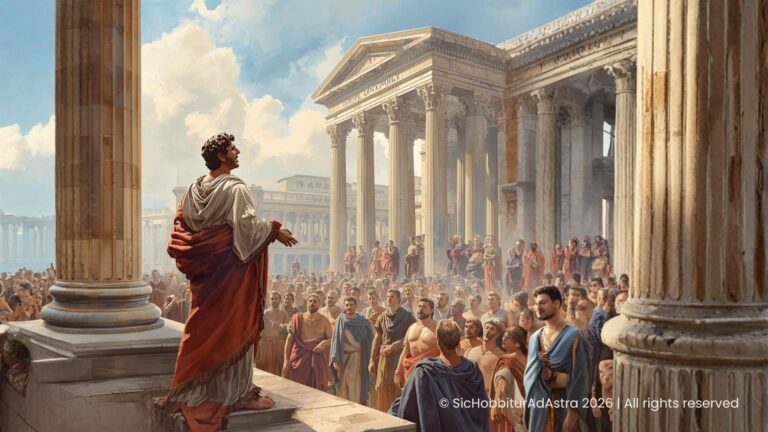
Cicero speaking to the Roman Forum, capturing the political and rhetorical intensity of ancient Rome as depicted in Robert Harris’ novel Imperium.
Reading recommendations

When History Needs a Story: Why Imperium Is a great Historical Fiction About Cicero for Students

Cicero comes alive in the streets and Forum of ancient Rome—his speeches, ambitions, and moral challenges unfolding in real time. In Robert Harris’ Imperium, students encounter the drama, tension, and intrigue of the Roman Republic in a way that captivates even those usually reluctant to read novels.

When History Needs a Story: Why Imperium Is a great Historical Fiction About Cicero for Students Read Post »

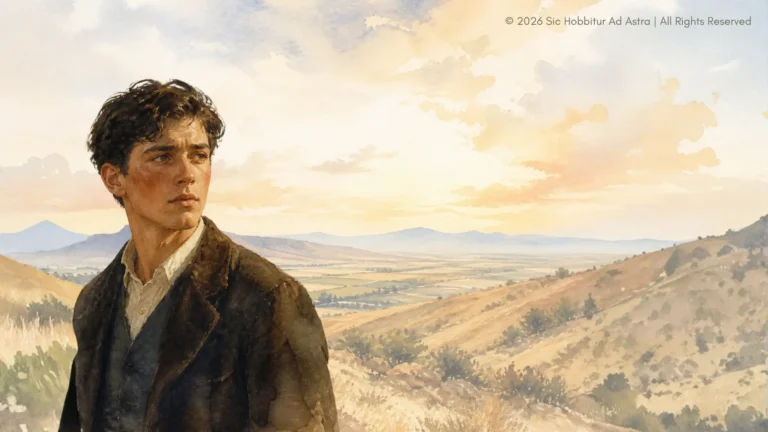
Watercolor portrait of Cal from East of Eden, thoughtful and conflicted, with the Salinas Valley behind him, evoking timshel — "thou mayest" — and moral choice.
Novel Studies

What Timshel Means in East of Eden: Choice, Freedom, and Moral Responsibility

In East of Eden, John Steinbeck introduces the Hebrew word timshel — “thou mayest” — as a lens for understanding human choice, moral responsibility, and freedom. This reflection explores how the concept resonates not only for characters like Cal but also for educators navigating the classroom.

What Timshel Means in East of Eden: Choice, Freedom, and Moral Responsibility Read Post »

Scroll to Top