Moral Choice

“Thou mayest.” The freedom to choose who we become runs through the greatest stories. Reflections on free will, responsibility, and the decisions that define a character.

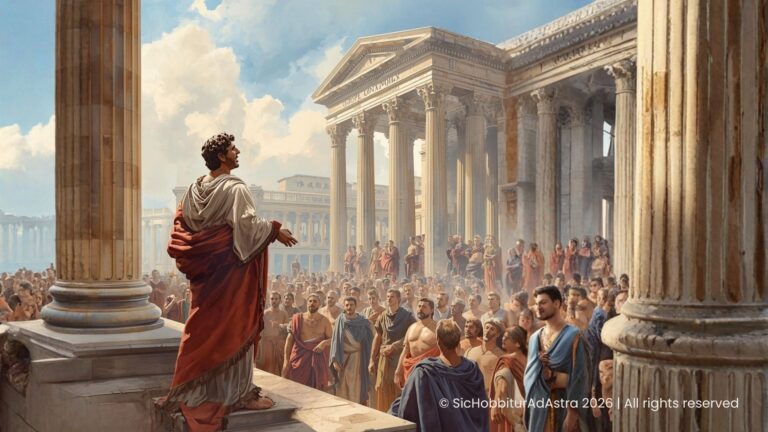
Cicero speaking to the Roman Forum, capturing the political and rhetorical intensity of ancient Rome as depicted in Robert Harris’ novel Imperium.
Reading recommendations

When History Needs a Story: Why Imperium Is a great Historical Fiction About Cicero for Students

Cicero comes alive in the streets and Forum of ancient Rome—his speeches, ambitions, and moral challenges unfolding in real time. In Robert Harris’ Imperium, students encounter the drama, tension, and intrigue of the Roman Republic in a way that captivates even those usually reluctant to read novels.


When History Needs a Story: Why Imperium Is a great Historical Fiction About Cicero for Students Read Post »

Salinas Valley Watercolor with East of Eden Characters
Novel Studies

What Timshel Means in East of Eden: Choice, Freedom, and Moral Responsibility

In East of Eden, John Steinbeck introduces the Hebrew word timshel — “thou mayest” — as a lens for understanding human choice, moral responsibility, and freedom. This reflection explores how the concept resonates not only for characters like Cal but also for educators navigating the classroom.

What Timshel Means in East of Eden: Choice, Freedom, and Moral Responsibility Read Post »

Assaf and his dog Dinka running through the streets of Jerusalem in search of Tamar, from Someone to Run With
Reading recommendations

Why Every High School Student Should Read D. Grossman’s “Someone to Run With”

David Grossman’s Someone to Run With is more than a novel—it’s a powerful journey through friendship, courage, and self-discovery. Follow Assaf and Tamar with your students across Jerusalem as they face impossible challenges, discover the true meaning of love and loyalty, and learn what it means to grow up.

Why Every High School Student Should Read D. Grossman’s “Someone to Run With” Read Post »

Scroll to Top