ARTICLE OVERVIEW
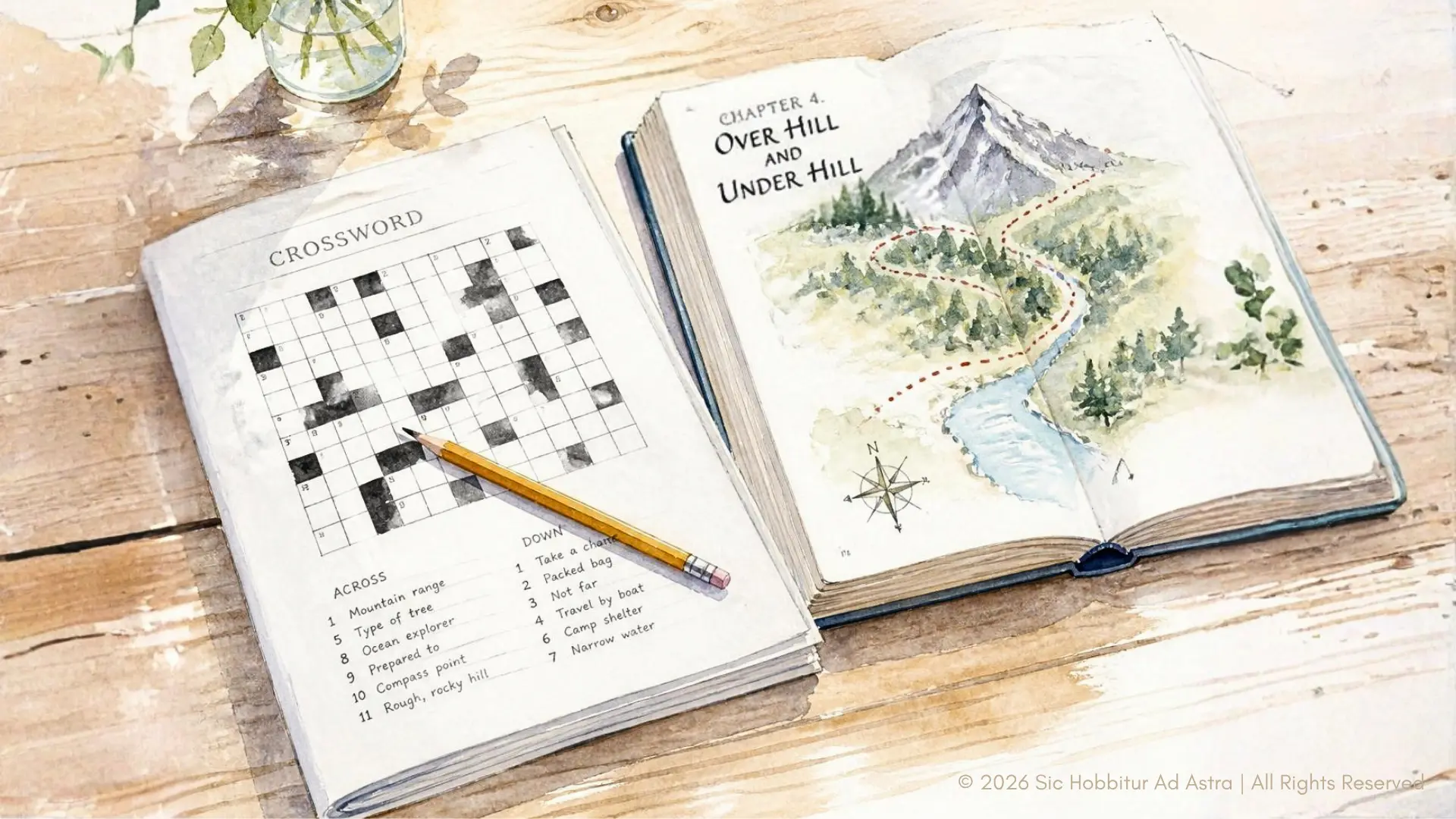
A crossword might look like a bit of fun to fill the last ten minutes of class—but it can do far more than that. Used well, crosswords send students back into the text: to reread a chapter, weigh a character’s choices, and fix new vocabulary in memory. This article shows how I use crossword puzzles in middle school ELA, with concrete examples from The Hobbit—for vocabulary, for revisiting key moments, and for deepening character understanding—plus ready-made resources for when there’s no time to build your own.
Are you a middle school ELA teacher, always on the lookout for fresh ideas and resources to make your teaching more engaging? Are you diving into an amazing book with your students and want a creative, effective way to reinforce vocabulary, comprehension, and character understanding? One tool you might not have considered—but that I find incredibly effective—is ELA crossword puzzles.
At first glance, crosswords might seem like just a fun, recreational activity. In reality, they are versatile and powerful teaching tools that can enhance understanding, reinforce vocabulary, and deepen students’ engagement with a text. I use crosswords extensively in my own lessons because they combine learning and play, making the study of literature both meaningful and enjoyable.
The first time I introduced this approach was during our reading of The Hobbit by J.R.R. Tolkien—a novel I consider exceptional for middle school ELA (if you haven’t explored it yet, I highly recommend reading my article on the educational value of The Hobbit for middle school, where I explain why this story is such a perfect fit for young readers). I used this strategy as part of a larger, structured study of the novel spanning 5–6 months, designed to develop students’ reading comprehension, writing, and analytical skills (here I describe this step-by-step approach in more detail). Crosswords came in only once students were already inside the story; for the very first encounter—decoding the runes, meeting Tolkien and the Inklings—I lean on a different set of activities, which I describe in how I introduce The Hobbit in middle school. In both homework and in-class activities, these puzzles were a privileged tool for systematic vocabulary work.
Now, let’s dive into practical ways to use this engaging teaching tool!
You can start experimenting right away with a sample crossword for Chapter 1 of The Hobbit, available below as a downloadable PDF with both blank and completed versions. Plus, if you’d like to extend the activity to the entire novel, there’s a complete resource that includes crosswords for all chapters, ready to integrate into your lessons.
1. Enhancing Specific Chapter Vocabulary
One of the greatest strengths of crosswords is their ability to draw students’ attention to specific words and expressions, making challenging vocabulary accessible and memorable. This is especially useful when studying a novel like The Hobbit, which is rich in evocative and unusual terms, from sorcerous to hobbit-hole.
To use this strategy, I start by carefully selecting key or complex words from the chapter and crafting clear, concise definitions. For example, in Chapter 1, the word sorcerous can be introduced as “related to magic,” providing a springboard for discussion and exploration. Then, I transform these words into a crossword using online tools like Crossword Labs or Puzzlemaker, creating an engaging activity that blends play and learning. Students can work individually or in pairs, completing the puzzle and then reviewing the answers together, which naturally reinforces comprehension and retention.
2. Revisiting Key Moments or Aspects of the Story
Crosswords are an excellent tool for helping middle school students revisit and solidify the major events of a story. By focusing on key moments from each chapter, students not only strengthen their memory and comprehension, but also develop a clearer understanding of narrative structure.
For example, when working on Chapter 1 of The Hobbit, you might choose a term like reasonable to highlight the practical temperament of the Baggins family, which stands in contrast to Bilbo’s emerging adventurous spirit. These carefully selected words and concepts can then be transformed into crossword clues, prompting students to think critically about why these moments matter in the story.
The real magic of this approach is how it encourages students to connect vocabulary directly to the story. As they fill in the puzzle, they recall contexts, character actions, and narrative events, which strengthens both understanding and memory. You can extend the activity by having students use the new words in sentences, short paragraphs, or even creative writing exercises, helping them internalize meaning while practicing writing and analytical skills. Integrating crosswords in this way transforms vocabulary study from a static exercise into a dynamic, interactive experience that enhances engagement and deepens literary understanding.
3. Deepening Character Understanding
Crosswords are also an effective way to explore characters, their relationships, and the choices they make. By linking names to traits or narrative roles, students are invited to actively consider personalities, motivations, and interactions, which promotes analytical thinking.
For instance, in Chapter 1, Thorin could be presented as “the last dwarf to arrive at Bilbo’s home,” while Belladonna is defined as “Bilbo’s mother.” Students then work through the puzzle and reflect on each character’s significance, discussing how their traits and decisions influence the story.
Crosswords focusing on characters can also help students notice how relationships and bonds develop throughout the story. As they track interactions between Bilbo, the dwarves, and Gandalf, they can see firsthand how friendship shapes choices and growth—a theme I explore more fully in my article on Friendship in The Hobbit, where I discuss the lessons Tolkien conveys about loyalty, courage, and companionship.
This approach encourages careful reading and attention to detail, helps students connect vocabulary to character understanding, and strengthens their ability to analyze relationships and dynamics within the narrative. It turns a simple activity into a meaningful exercise in literary analysis and critical thinking.
An Interesting Idea, but… I Don’t Have Time!
I understand how challenging it can be to prepare materials from scratch, especially when lesson planning, grading, and other responsibilities compete for your time. That’s why I created ready-made crossword collections for each chapter of The Hobbit, covering vocabulary, key plot points, and characters. These resources allow teachers to integrate crosswords seamlessly into a structured curriculum without losing depth or educational value.
Currently, similar collections are also available for The Magician’s Nephew by C.S. Lewis—a novel I write about more fully in teaching The Magician’s Nephew in middle school. You can explore the crossword resources in my TPT store:
Stay tuned for more to come in the future!
Why ELA Crossword Puzzles Work
Crosswords are more than a fun activity—they are a tool that actively supports literacy development in middle school students. They encourage revisiting the text, reflecting on language, and engaging deeply with plot and character details. By integrating them into your teaching, you invite students to read actively, strengthen vocabulary, and develop analytical and critical thinking skills.
Used alongside a broader, structured approach to the novel—such as the step-by-step method I outline in How to Teach The Hobbit in Middle School—crosswords enhance comprehension, discussion, and creative reflection. This combination makes literature both manageable for teachers and enriching for students, turning reading into an interactive and meaningful experience.
What about you? I’d love to hear how you’ve used crosswords—or other interactive activities—in your middle school ELA classroom. Do your students enjoy them? Which strategies have worked best for you? Share your thoughts in the comments!
Happy teaching,
Chiara