Middle School ELA

Welcome to our Middle School ELA hub, where teachers can find high-quality resources, lesson plans, and classroom activities for 6th–8th graders. Explore materials designed to improve reading comprehension, writing skills, vocabulary, and literary analysis. From classic novels to engaging intertextual comparisons and discussion guides, these resources support dynamic, thoughtful, and meaningful English Language Arts instruction. Perfect for educators seeking ready-to-use tools for literature units, cross-curricular lessons, and reflective student discussions.

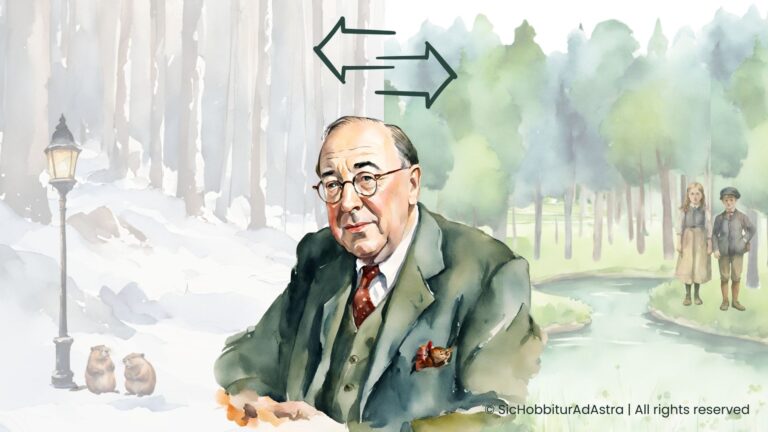
Watercolor painting of C.S. Lewis with snowy Narnia on one side and the Wood Between the Worlds on the other, two arrows above his head pointing to each world, symbolizing the choice of reading order.
C.S. Lewis C.S. Lewis - The Lion, the Witch and the Wardrobe C.S. Lewis - The Magician's Nephew Middle School ELA

The Magician’s Nephew Prequel: Written Later, Set First — Publication Order vs Chronological Order in Narnia

In The Magician’s Nephew, C. S. Lewis crafted Narnia’s origins — yet the novel was not written first. Does this have implications for teaching the series? Absolutely. This article explores The Magician’s Nephew’s role as a Narnia prequel and why the difference between publication and chronological order matters in the classroom.

Two middle school students, a boy and a girl, reading an open book from which stylized silhouettes of literary characters emerge, symbolizing vulnerability, internal conflict, and personal growth in literature.
C.S. Lewis - The Lion, the Witch and the Wardrobe C.S. Lewis - The Magician's Nephew H. Lee - To Kill a Mockingbird Homer - The Iliad J.R.R. Tolkien - The Hobbit Middle School ELA

What Makes a Character Relatable to Middle School Students?

Why do some literary characters stay with students long after the last page is turned? This article explores vulnerability, inner conflict, and personal growth as key elements that help middle school readers connect deeply with stories across classic and modern literature.

Scroll to Top