Article Overview
Teaching The Magician’s Nephew well takes more than a good book and good intentions—it takes a plan for the whole term. This is the one I’ve built over years in the classroom: how to open the novel, pace its fifteen chapters, build worksheets that push past plot into real interpretation, and make homework, discussion, and the final assessment work as one arc. It closes with the creative activities I keep coming back to, and a ready-made resource for teachers short on planning time.
By the end of a unit on The Magician’s Nephew, each of my students has a notebook that has filled up chapter by chapter—close-reading notes, answers to the interpretation questions, vocabulary puzzled out, a growing stack of short creative pieces. Getting a class to that point isn’t a matter of one good idea. It’s a hundred small decisions about how to read a novel together: how fast to go, when to stop and dig, what to set for homework, how to run a discussion that doesn’t stall.
Over the years I’ve settled on a way of making those decisions—an approach structured enough to give both teacher and students a clear path through the book, and flexible enough to leave room for the conversations you cannot plan. What follows is that approach, in five steps, from the first day’s introduction to the final assessment. (If you want the case for why this novel repays teaching in the first place, I make it in the pillar article on the themes of The Magician’s Nephew; this article is about the how.)
Step 1
CURIOSITY: INTRODUCING THE READING
Step 2
STRUCTURE: PACING THE LESSONS
Step 3
DEPTH: WORKSHEETS THAT GUIDE DEEPER THINKING
Step 4
ORGANIZATION: HOMEWORK AND CLASS DISCUSSION
Step 5
REFLECTION AND SYNTHESIS: FINAL ASSESSMENT
Step 1 — Curiosity: Introducing the Reading
Before the book is even opened, there is a decision to make: should students begin with The Magician’s Nephew, which comes first in Narnia’s story, or with The Lion, the Witch and the Wardrobe, which Lewis published first? The choice genuinely shapes how students experience the series, and I weigh it up in a separate article on the Narnia reading order.
Once that is settled, the introduction matters more than teachers sometimes expect. Well begun is half done, as Mary Poppins liked to remind her charges—and it is nowhere truer than at the start of a novel. The aim is not to explain the book but to open a space for curiosity, so that when the reading begins, students are already leaning in.
I usually start with Lewis himself: who he was, and how his lifelong friendships and conversations fed the making of Narnia. The friendship with Tolkien in particular tends to fascinate students—the idea that these two famous imaginary worlds were dreamed up by friends who read each other their drafts. (I say more about that creative circle in my article on introducing The Hobbit in middle school.)
From there I introduce the main characters and a few of the novel’s guiding questions—not enough to spoil anything, just enough to stir anticipation. It is a little like laying out the ingredients before baking: students see the pieces, not the finished cake, and they grow curious about what these will become.

Step 2 — Structure: Pacing the Lessons
Once curiosity is lit, a steady rhythm helps students absorb both story and meaning. For The Magician’s Nephew I usually pair two chapters a week. The chapters are short, and reading them in pairs keeps momentum without rushing. The one exception is Chapter 13, which I give a week of its own, because it carries more thematic weight than any other. With fifteen chapters, this pace carries a class through the novel in roughly two to three months.
The week itself has a predictable shape:
- A two-hour weekly session. The first hour reviews homework, revisits the previous chapters, and includes a short quiz; the second is spent reading the new pair of chapters together.
- Guided worksheets. Structured questions carry students from comprehension through to analysis and reflection, in class and at home.
- Creative extensions. Crosswords, letters to characters, and similar activities keep the reading active rather than passive.
At the end comes a final assessment that lets students pull together what they have understood about plot, character, and theme. The rhythm gives the teacher a clear roadmap and gives students the security of knowing what each week will ask of them.
Step 3 — Depth: Worksheets That Guide Deeper Thinking
The Magician’s Nephew is richly layered—character growth, moral choices, the strange new world of Narnia—and I use chapter-specific worksheets to help students work through those layers step by step, from basic comprehension toward genuine analysis. I build each worksheet in four parts, each doing a different job:
- Comprehension. Questions that anchor the plot, offered at different levels of difficulty. I often read the main ones aloud before the reading, so students know what to follow.
- Vocabulary. The questions that ask why: why a character acts as they do, what a choice costs, which themes are surfacing, how cause leads to effect. I usually set these for homework, so students have time to think rather than answer on the spot.
- Interpretation. Key words and distinctions to sharpen—Lewis’s language rewards the attention, and building the vocabulary strengthens both reading and writing.
- Engagement. At least one writing task per worksheet—a description, a summary, a personal narrative, an argument, a reflection—connecting the story to the student’s own experience of courage, responsibility, or wonder.
To make this concrete, I’ve prepared a free sample worksheet for Chapters 1–2, with answer keys—a glimpse of the full set that covers the whole novel.
Step 4 — Organization: Homework and Discussion
In my experience, homework is not a punishment—it’s an opportunity. With The Magician’s Nephew, it allows students to revisit chapters at their own pace, reflect on the story, and engage more deeply. Chapter-specific worksheets let students focus on different aspects of the novel: plot, character development, themes, narrative structure, and vocabulary.
I suggest a dedicated notebook for the novel, where students collect responses to comprehension questions, vocabulary exercises, interpretation prompts, and creative writing tasks. This organized approach helps track progress, revisit challenging passages, and prepare for class discussions.
Discussion is at the heart of literature teaching. In class, students use their notebooks to share interpretations, notice details, and explore different perspectives. I often have students lead portions of the conversation, using worksheets as guides. The goal is not interrogation but creating a collaborative environment where everyone feels confident expressing ideas.
Over time, homework and discussion together become a personal map of each student’s journey through Narnia. You can see, chapter by chapter, how their understanding of characters, themes, and plot deepens and evolves. These moments often spark the most engagement, as students connect themes like curiosity, moral courage, and wonder to their own lives.
Step 5 — Reflection and Synthesis: The Final Assessment
For the final assessment I try to cover several levels of understanding at once:
- Comprehension — multiple-choice and short-answer questions on the key events.
- Character analysis — prompts on motivation, decision, and how a character changes across the novel.
- Thematic understanding — questions that ask students to name the recurring themes and moral dilemmas and say why they matter.
- Written production — short essays or reflections that pull plot, character, and theme together.
Keeping the assessment close in shape to the weekly worksheets makes a real difference: students meet it on familiar ground and can concentrate on showing what they know, rather than decoding an unfamiliar format.
Bonus: Creative Activities
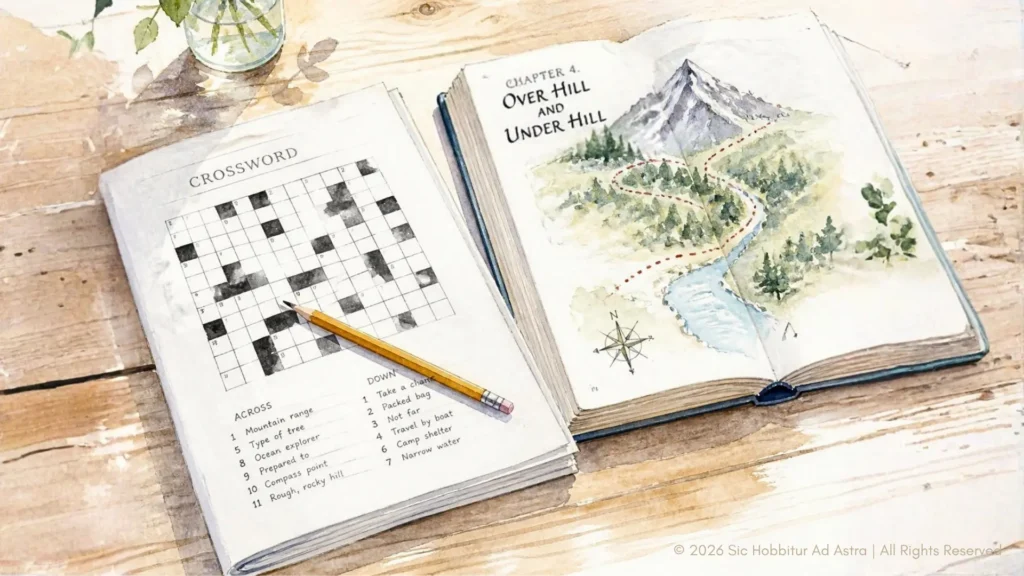
Alongside the worksheets, I like to leave room for activities that let students play with the text. For The Magician’s Nephew I made chapter-by-chapter crossword puzzles that reinforce vocabulary and fix the key events in memory; because Lewis’s language is so rich, time spent dwelling on it pays off in comprehension as much as enjoyment (I make the fuller case for crosswords in this article on using them with The Hobbit).
A few other extensions I return to:
- Letters written to a character, to get inside a perspective.
- Short creative pieces imagining a different choice, or a different ending.
- Quick sketches or visual takes on a key scene.
None of these is filler: each gives students another way into the story, and makes the reading stick.
A Resource For Busy Teachers
If this approach appeals to you but you don’t have time to plan and build all the materials, I’ve put together a ready-to-use bundle for The Magician’s Nephew that follows exactly the steps above—and adds more, including the novel-to-Bible comparison I recommend so often (I explain why in the article on comparing The Magician’s Nephew with the Bible).
You’ll find the full bundle on Teachers Pay Teachers here: The Magician’s Nephew MEGA Bundle: Intro, Close Reading, Activity, Puzzles, Test.
How do you work through a novel with your students? I’d love to hear your own approach in the comments.
Thank you for stopping by—and happy teaching!
Chiara