Fantasy might seem like pure escape, but in the classroom it can serve as a springboard for exploring moral growth, responsibility, temptation, creation, justice, and the dynamics of power—if the right book is chosen. The Narnia saga, for example, is packed with rich, accessible material for discussion and classroom projects (and The Hobbit, of course! Readers of this blog will know I can’t resist mentioning it; it’s my favorite novel for middle schoolers and has inspired multiple articles here). In earlier posts—one on The Magician’s Nephew and one on The Lion, the Witch and the Wardrobe explored the thematic richness of these novels and highlighted ways they can inspire cross-curricular classroom activities.
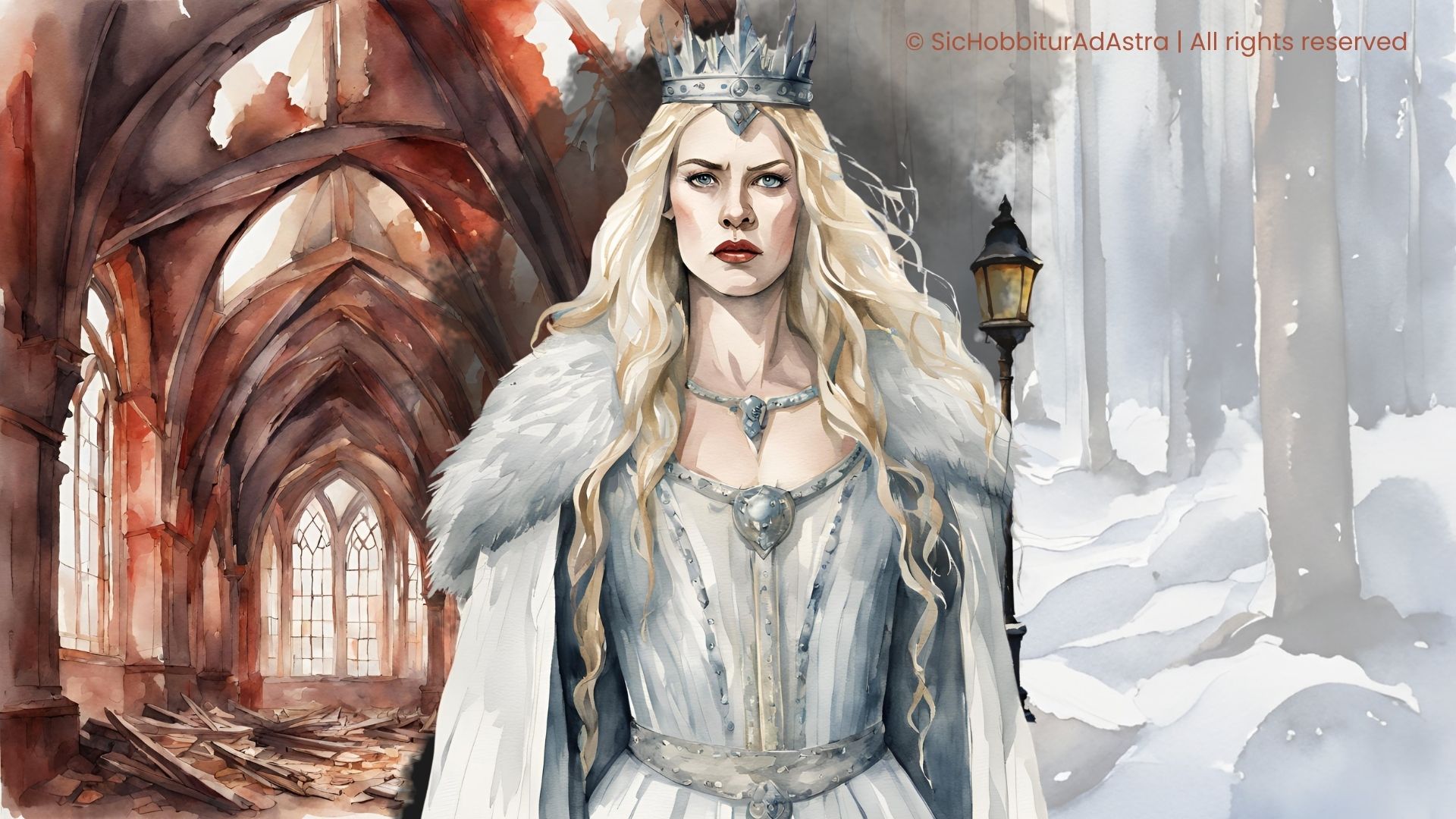
In this article, I focus on one particularly compelling thread: the White Witch in Narnia as a case study in tyranny, the abuse of power, and the meaning of justice. While not the central themes of Lewis’s books for young readers, they offer ample opportunities for students to reflect critically.
Reading The Magician’s Nephew followed by The Lion, the Witch and the Wardrobe allows students to observe the White Witch’s ideology in development—from abstract ideas in Charn to concrete actions in Narnia. This sequence vividly illustrates both the origins and consequences of authoritarian rule.
The White Witch as a Study in Tyranny
Tyranny is more than cruelty; it is structured, defended, and rationalized. Jadis, the White Witch of Narnia, provides a clear, age-appropriate example of how authoritarian thinking translates into oppression.
By comparing Charn and Narnia, students can observe how authoritarian ideas evolve from abstract reasoning to destructive practice, noticing in an age-appropriate way how fear, rules, and justifications for power manifest in action.
Interdisciplinary Teaching Suggestions
Drawing on my classroom experience, here are ways to connect the study of the White Witch in Narnia with other disciplines. Think of these as friendly suggestions from one teacher to another, designed to spark discussion and hands-on learning.
1. History (WWII): Totalitarianism and “Reasons of State”
Lewis wrote Narnia during World War II. Invite students to compare the White Witch’s methods—fear, propaganda, suppression, concentration of power—with real-world authoritarian regimes, exploring how extreme measures were justified in the name of national destiny or survival.
2. Civic Education: Authority vs. Tyranny
The White Witch’s rule contrasts sharply with Aslan’s leadership, based on sacrifice rather than fear. Encourage students to reflect on legitimacy, rule of law, and civic responsibility through this comparison.
3. Ethics: Law, Justice, and Moral Responsibility
The Witch invokes the “Deep Magic” to demand Edmund’s life. Discuss whether her actions reflect justice or misuse of legal rules, and what fairness truly entails. Comparing Jadis’s rigid logic with Aslan’s restorative approach fosters age-appropriate ethical reasoning, offering students a safe space to explore law, justice, and moral responsibility.
Expanding the Conversation: Other Middle Grade Texts on Tyranny
It is useful to situate Narnia among age-appropriate works exploring similar themes. Middle school students may also engage with:
- Animal Farm by George Orwell – an accessible allegory examining how revolutionary ideals can devolve into authoritarian control.
- The Giver by Lois Lowry – raises questions about conformity, surveillance, and the cost of eliminating suffering.
- The Hunger Games by Suzanne Collins – suitable for older middle school students, exploring spectacle, propaganda, and systemic oppression.
- Number the Stars by Lois Lowry – provides a historical perspective on resistance to totalitarianism during WWII.
Even a single lesson drawing parallels between the White Witch in Narnia and one of these texts can deepen students’ understanding of how literature across genres addresses the concentration of power and the fragility of justice. Narnia thus becomes part of a broader literary conversation about authority, responsibility, and resistance.
Classroom Inspiration
Thank you for reading! I hope these ideas inspire you to explore Narnia in fresh ways with your students. By connecting The Magician’s Nephew and The Lion, the Witch and the Wardrobe, students gain insight into power, justice, and responsibility in an age-appropriate, imaginative context.
For more practical ideas, activities, and interdisciplinary projects to bring these novels—and others—to life, explore the rest of the blog. You can also visit my Teachers Pay Teachers store for a wide variety of resources on these novels, including chapter introductions, analyses, crosswords, quizzes, and biblical comparisons:
Wishing you an inspiring teaching experience,
Chiara