ARTICLE OVERVIEW
This article explains why The Lion, the Witch and the Wardrobe by C.S. Lewis is one of the most powerful and versatile choices for middle school ELA classrooms. It explores four key reasons to teach this novel — from its captivating story and memorable characters to its rich cross-curricular potential and its ability to spark genuine personal reflection. Educators will also find links to deeper explorations of individual themes, classroom activities, and ready-to-use teaching resources.
Choosing the right book for your classroom can feel like a balancing act: you want something that captivates your students, keeps them turning pages, and sparks thoughtful discussion. But finding a story that checks all those boxes isn’t always easy. The Lion, the Witch and the Wardrobe by C.S. Lewis, however, is one of those novels that does just that—and much more. As you may already know, it is the second novel in the Narnia series, following The Magician’s Nephew (another great book worth considering: in this article I explain its key themes and why it matters).
With its compelling plot, unforgettable characters, and timeless themes, The Lion, the Witch and the Wardrobe engages students on multiple levels, offering opportunities for rich, cross-curricular conversations that resonate long after the final page.
If you are wondering why teach The Lion, the Witch and the Wardrobe rather than another fantasy classic, this article gives you four clear, experience-based reasons. Each one comes from years of teaching this novel with sixth graders of different backgrounds, reading levels, and beliefs — and watching it work, every time.
“Reading The Lion, the Witch and the Wardrobe made me realize that real courage isn’t about being fearless — it’s about choosing to do what’s right even when you’re scared.”
Sofia, 6th Grade
1. It Hooks Students from the First Chapter — and Keeps Them Reading
At its core, The Lion, the Witch and the Wardrobe is a beautifully paced adventure story. From the moment Lucy steps through the wardrobe into a snow-covered world, students are hooked. The plot moves quickly, the stakes are clear, and the conflict between good and evil is vivid without being simplistic. This accessibility matters — especially for reluctant readers who need a story that earns their attention before asking for their analysis.
But what makes this novel exceptional is what lies beneath the adventure. As students follow the Pevensie siblings through Narnia, they encounter questions that go far deeper than plot: What does it mean to betray someone you love? Can a wrong choice be undone? What kind of leader earns true loyalty? These are not abstract literary questions — they are the questions middle schoolers are already living.
The Lion, the Witch and the Wardrobe meets students where they are, and then takes them somewhere further.
2. It Opens a Window into the Author’s Life and Beliefs
Teaching The Lion, the Witch and the Wardrobe also provides a remarkable opportunity to explore C.S. Lewis as a person — his conversion from atheism to Christianity, his friendship with J.R.R. Tolkien, and his conviction that story is one of the most powerful vehicles for truth.
Understanding Lewis enriches the reading experience in ways that purely thematic analysis cannot. When students know that Lewis wrote Narnia not as a disguised sermon but as what he called a supposal — an imaginative exploration of what redemption might look like in another world — they begin to engage with the text at a new level.
This question — is The Lion, the Witch and the Wardrobe an allegory, or something more nuanced? — is one of the most productive discussions you can have with a middle school class. I explore it in depth in this dedicated article: The Lion, the Witch and the Wardrobe Allegory: Understanding C.S. Lewis’s Intent.
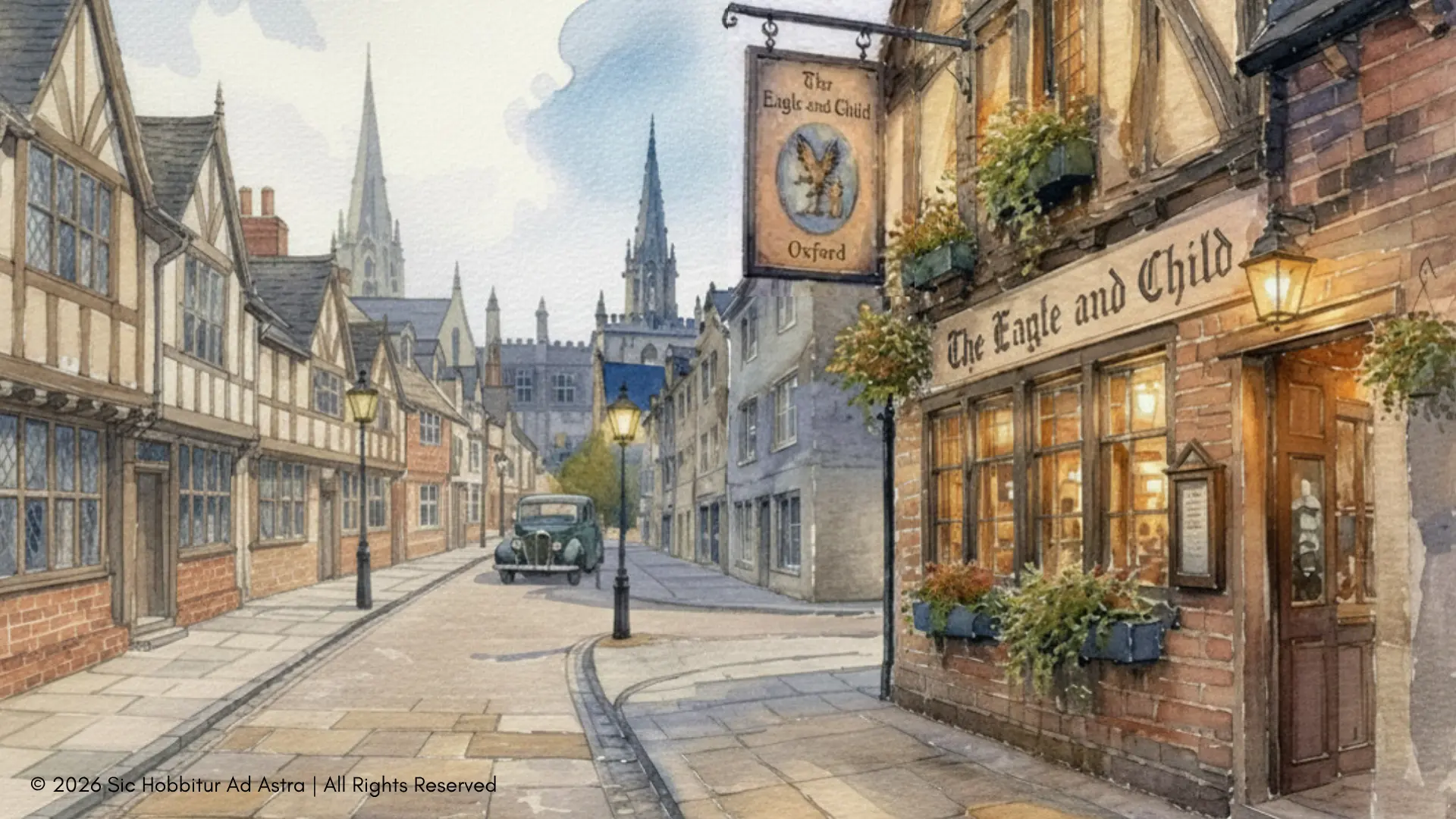
Lewis’s friendship with Tolkien also opens a natural interdisciplinary thread: both writers belonged to the Inklings, a literary circle that met regularly at an Oxford pub to share drafts and challenge each other’s thinking. Exploring this connection can inspire students to reflect on the importance of creative community — and to see literature not as the product of solitary genius, but of dialogue and friendship. I discuss this further in my article on introducing The Hobbit to middle school students.
The Eagle and Child, Oxford – This historic pub was the regular meeting place of the Inklings, the literary group that included C.S. Lewis and J.R.R. Tolkien. Here, they shared drafts, discussed ideas, and influenced each other’s works, fostering some of the most beloved literature of the 20th century.
3. It Supports Rich, Cross-Curricular Teaching
Few novels at this level offer as many natural bridges to other disciplines as The Lion, the Witch and the Wardrobe.
- HISTORY. Lewis wrote Narnia during and after World War II. The four Pevensie children are evacuated from London during the Blitz — a detail students often overlook, but one that anchors the fantasy in a very real historical experience. The White Witch’s eternal winter, her surveillance of Narnia, her use of fear and stone — all of this can spark productive discussions about what tyranny looks like, how authoritarian power justifies itself, and what resistance requires. I explore these connections in detail in this article: The White Witch and the Concept of Tyranny: Teaching Power and Justice Through Fantasy
- RELIGIOUS AND LITERARY HISTORY. For teachers in faith-based or humanities-focused contexts, the novel lends itself beautifully to intertextual comparison with the Bible. Aslan’s sacrifice, resurrection, and role as creator figure (especially developed in The Magician’s Nephew) offer rich material for close reading and comparative analysis — across traditions and regardless of students’ personal beliefs. I have taught these comparisons in classes with students from Christian, Muslim, and secular backgrounds, and found that Lewis’s themes of sacrifice, justice, and restoration resonate across every context. If you’d like to explore this approach, I have created a ready-to-use classroom activity: The Lion, the Witch and the Wardrobe and the Bible: An Intertextual Comparison Activity.
- CHARACTER AND MORAL REASONING. The Pevensie siblings — and especially Edmund — offer extraordinary material for discussions of character development, moral responsibility, and growth. Why do we make choices that hurt others? What does genuine redemption look like? How do we recognize manipulation when we’re in the middle of it?
These questions sit at the heart of middle school social-emotional learning, and The Lion, the Witch and the Wardrobe raises them in a way that feels natural, not forced.
4. It Stays with Students
Every time I teach The Lion, the Witch and the Wardrobe, something happens that does not happen with every book: students keep talking about it after class. They come back the next day with questions. They argue about Edmund in the hallway. They wonder what it would have meant for Aslan to choose differently.
This is the mark of a novel that has done something more than deliver information. It has offered students an encounter — with characters who feel real, with moral questions that matter, with a world that is strange enough to feel liberating and familiar enough to feel true.
What makes certain characters so memorable for middle school readers — and why does Edmund, in particular, resonate so deeply? I explore this question in a dedicated reflection: What Makes a Character Relatable to Middle School Students?
Ready to Teach The Lion, the Witch and the Wardrobe?
If this novel is on your reading list for the year, I have created a comprehensive bundle of ready-to-use resourcesdesigned specifically for middle school ELA classrooms. It includes:
- Chapter introductions and reading guides
- Character analysis activities
- Discussion questions aligned to ELA standards
- A thematic exploration of courage, sacrifice, and redemption
- An intertextual comparison with the Bible
No prep required — just print and teach.
Explore the Full Bundle on Teachers Pay Teachers!
Explore the Full Narnia Cluster
This article is the starting point of a series of connected posts on The Lion, the Witch and the Wardrobe. Each one goes deeper into a specific angle — choose the one that fits where you are in your unit:
| Topic | Article |
|---|---|
| Is Narnia an allegory? | Allegory or Supposal: Understanding C.S. Lewis’s Intent |
| Connecting the novel to the Bible | Intertextual Comparison Activity: LWW & the Bible |
| Teaching tyranny and justice | The White Witch and the Concept of Tyranny |
| Why students connect with characters | What Makes a Character Relatable? |
| Reading order: LWW or Magician’s Nephew first? | Publication Order vs. Chronological Order in Narnia |
And what about you?
What brings you to teach The Lion, the Witch and the Wardrobe in your ELA class? Is it the themes, the characters, the cross-curricular potential — or something else entirely?
Share your thoughts in the comments below. I would love to hear your perspective.
And if you are exploring the broader Narnia series, you might also enjoy this article on The Magician’s Nephew themes— another powerful choice for middle school, and a beautiful companion text to this one.
Thanks for stopping by, and happy teaching.
Chiara