ARTICLE OVERVIEW
How do you make a novel published in 1937 feel alive to a room of middle schoolers? Not by starting with the plot. This article shares the way I open The Hobbit — through mystery and context rather than chapter summaries: decoding the runes on the title page, and stepping into the Oxford pub where Tolkien and the Inklings traded myths and stories. Along the way, students meet Tolkien the scholar, discover that fantasy grows from real history and language, and begin to see courage, loyalty, and moral choice taking shape beneath the adventure. Includes classroom-ready activities to turn that first encounter into genuine curiosity.
If you’re bringing The Hobbit to your class for the first time, you might be wondering how to make a novel published in 1937 feel alive and relevant to today’s students. I’ve asked myself the same question many times. Like you, I wanted more than polite compliance from my class—I wanted genuine curiosity.
Over the years I’ve come to believe something that shapes how I open this book, and really any book: the way we introduce a novel already teaches students how to read it. Begin with a plot summary and a list of characters, and you have quietly told them that a book is information to be extracted. Begin instead with their own questions, with mystery, with language—and you tell them something truer: that a book is a world to be entered, and that reading is an act of attention and curiosity, not a task to be completed.
So I don’t start with the plot. I start with a few real questions worth carrying into the first page, with runes to decode, and with the story of the writers who gathered in an Oxford pub. What follows are the three doors I use to bring students into Middle-earth—and, I hope, into a different way of reading altogether. (If you’d first like to step back and see the broader educational value of The Hobbit—why this novel earns its place in the classroom at all—I’ve made that fuller case elsewhere.)
The First Door — Their Own Questions
The first door costs nothing to prepare and often does the most work—and it comes before students have read a single line, before Tolkien’s name is even on the board. I simply put a few large, open questions in front of them. Not comprehension questions, and not questions with tidy answers, but the kind of questions the novel itself will spend three hundred pages exploring:
- Can a person be brave and afraid at the same time?
- What actually makes someone a hero—strength, or something else?
- Do we really know who we are until we’re tested?
- What would it take for you to leave everything comfortable behind?
- Is “home” a place you leave, or something you carry with you?
Students write down their own answers first—privately, honestly—and then we talk. There are no wrong responses at this stage, and that is precisely the point: the questions belong to them before they belong to Bilbo. Beginning here, before any context or vocabulary, tells students that this book is going to be about something that concerns them.
Then we read. And as the novel unfolds, we return to what they wrote. They watch a timid, comfort-loving hobbit discover a courage that includes his fear rather than erasing it. They watch the least likely member of the company become its quiet hero. They see Bilbo learn who he is only once the road has tested him. The questions they answered in the abstract become, chapter by chapter, questions the story is answering alongside them—sometimes confirming their first instincts, sometimes complicating them.
This is what turns reading into something more than following a plot. Students who begin with their own questions read differently: the plot still pulls them forward, but underneath it they are testing their own answers against Bilbo’s. The novel becomes a conversation partner rather than an assignment—and that shift, more than any single activity, is what I most hope to create before we ever reach the first page.
The Second Door — The Runes on the Page
Here is where students discover who Tolkien really was—and why it matters. He was not only a novelist but a professor of Anglo-Saxon language and literature, and, as Tolkien scholar Tom Shippey has shown, his stories grew directly from that linguistic expertise. Middle-earth was not dreamed up out of nothing; it was built, word by word, on the foundations of real languages and old northern myth. The runes on the title page are the first visible proof of it—which is exactly what makes them such a powerful place to begin.
Before students encounter Bilbo or the Shire, they are faced with mysterious symbols framing the title page. That initial moment of puzzlement is pedagogically rich: it invites inquiry, decoding, and interpretation.
Tolkien’s runes are inspired by historical Anglo-Saxon and Norse alphabets. Because he was trained in Old English language and literature, his adaptation of these scripts was rooted in authentic scholarship. Sharing this background allows students to see that fantasy often emerges from historical sources. The strange symbols are not random decorations; they echo alphabets once carved into wood and stone.
A meaningful classroom activity can deepen this awareness. After introducing Tolkien’s runic alphabet, students may first write their own names in runes, exploring how sounds correspond to unfamiliar shapes. Once they gain confidence, they can attempt a more challenging task: translating the runic version of the novel’s title printed at the beginning of The Hobbit.
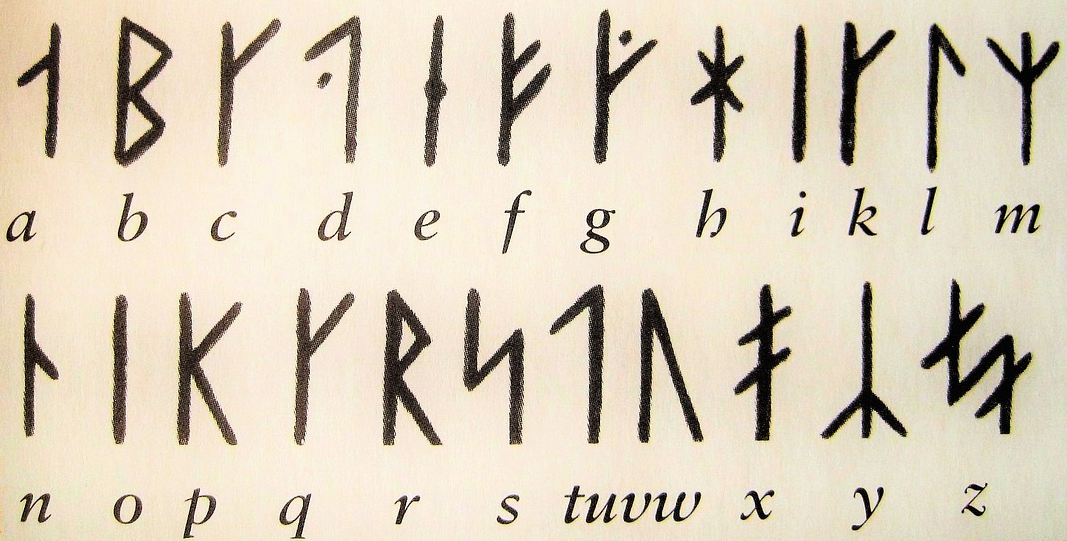
As recognizable letters gradually emerge from enigmatic symbols, students experience the intellectual satisfaction of uncovering hidden meaning. In doing so, they practice careful observation, pattern recognition, and interpretative reasoning—skills that are foundational to literary analysis. Through this process, language becomes tangible. Students move from passive reading to active engagement, discovering that even the typography of a book contributes to world-building.
The Third Door — The Inklings’ Table
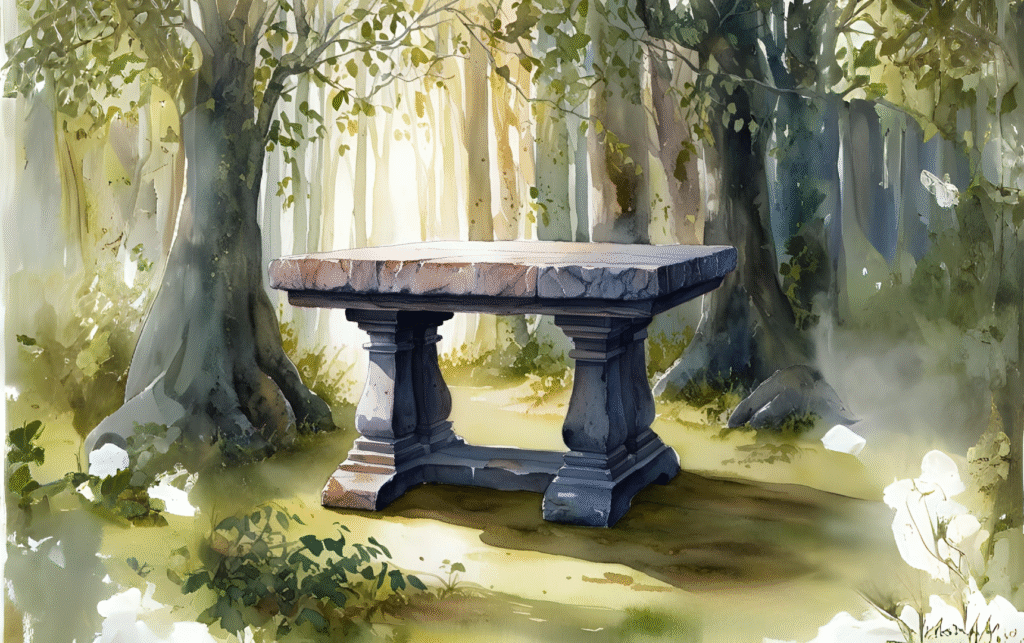
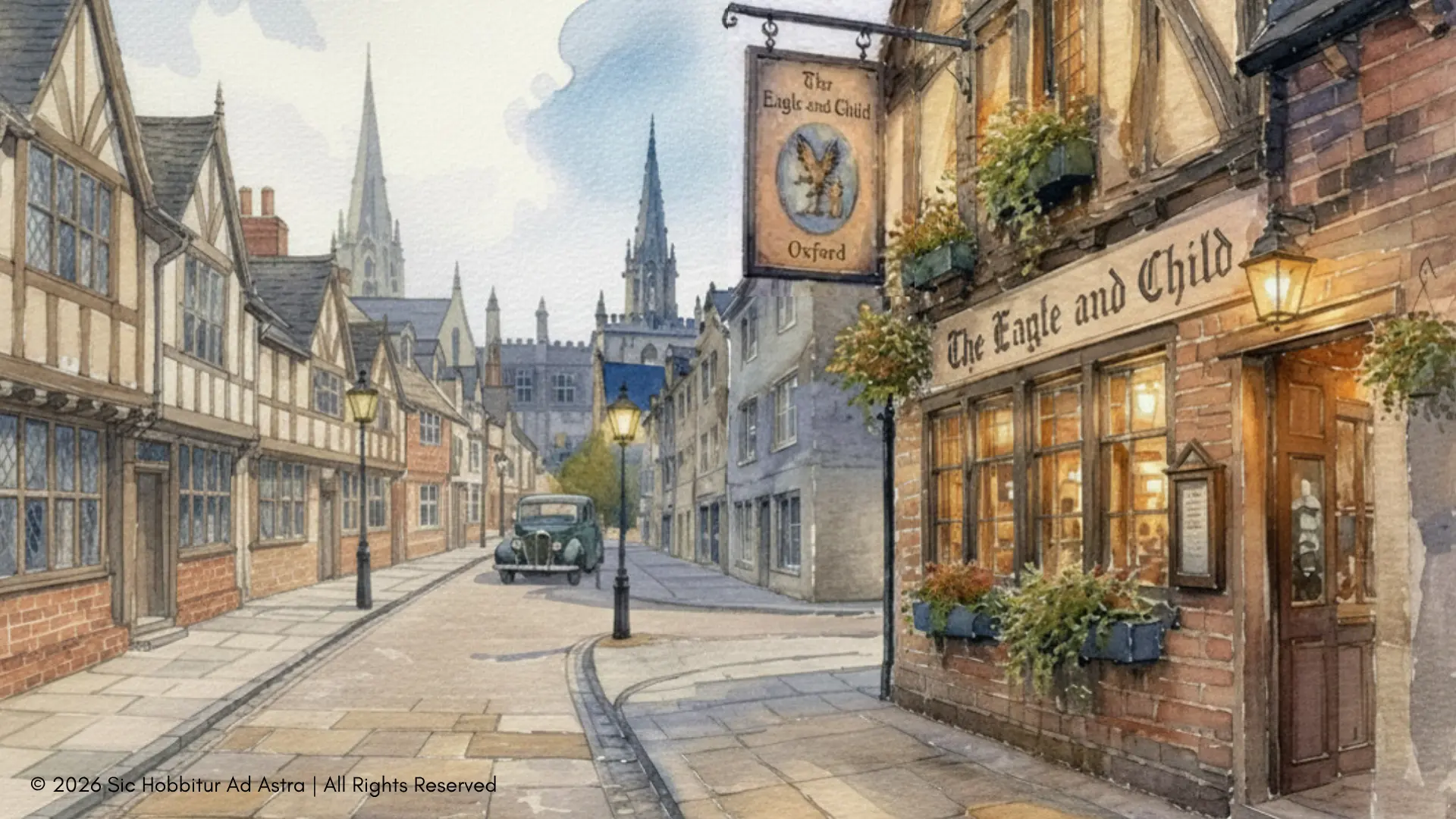
It is equally valuable to situate the novel within the creative community that supported its development. Tolkien did not write in isolation. He was part of The Inklings, an informal literary circle that met regularly in Oxford, often at The Eagle and Child. Among its members was his close friend C. S. Lewis, along with other writers and scholars who shared a passion for myth and narrative.
For students, discovering this context can be transformative. Literature is often presented as the product of solitary genius, yet the history of the Inklings reveals a different reality. Their meetings were spaces of critique, encouragement, and shared intellectual exploration. Literary scholar Diana Pavlac Glyer has demonstrated that the group’s collaborative discussions significantly influenced the development of major works, including Tolkien’s fiction.
Understanding this collaborative dimension allows students to see creativity as relational. Stories emerge not only from imagination, but from conversation. When students recognize that even celebrated authors relied on feedback and dialogue, they may begin to value peer discussion within their own classroom community.
What united the Inklings, despite their varied temperaments, was a shared conviction: that myth conveys enduring truths. That belief runs all through The Hobbit, where courage, greed, loyalty, and moral choice play out within a fantastical setting—and Tolkien defended it directly in his essay On Fairy-Stories, arguing that fantasy lets readers experience “recovery,” seeing the real world again with fresh eyes. It is worth sharing this with students, because it reframes what they are about to read. Bilbo’s journey is not escapism; it is a way of examining growth, moral choice, and self-discovery at a slight remove, where they can be seen more clearly. Myths, students begin to realize, are not distractions from reality but instruments for looking at it.
An Interesting Idea, but… I Don’t Have Time!
I understand!
Thoughtful preparation requires time, and time is often the scarcest resource in a teacher’s schedule. Designing activities that illuminate Tolkien’s runes, explaining the significance of the Inklings, and connecting these elements to broader literary themes can feel overwhelming.
For this reason, I have created a detailed, classroom-ready presentation specifically designed to help teachers open The Hobbit with their students. It guides students through decoding the runic title page, explores Tolkien’s linguistic background, and explains the cultural importance of the Inklings. The visual materials featured in this post are all included in the resource.
A note on what’s inside: the presentation focuses on the runes and the literary context—the pieces that take real time to prepare. The opening questions I described above aren’t part of it, and they don’t need to be: they cost nothing but a few minutes and a whiteboard, so I’d rather simply hand them to you here. What the resource saves you is the laborious part—the runic decoding activity, the background on Tolkien and the Inklings, the visuals—so you can spend your preparation time where it genuinely helps.
You can explore it here:
A Different Way of Reading
Beginning with questions, with runes, and with the Inklings is not a warm-up before the real lesson starts. It is the lesson. Each of these doors teaches the same quiet truth: that a book is a world made with care, rooted in real language and history, worth entering slowly and with questions of our own. Students who come to The Hobbit this way are not just ready to read it—they are ready to read differently, with curiosity and attention, and that is a habit that outlasts any single novel.
And for more creative classroom strategies, you can also check my posts on what The Hobbit teaches about friendship or using crossword puzzles to enhance learning. You may also be interested in a comprehensive guide to close reading the novel, chapter by chapter.
Thanks for joining me on this adventure!
Happy teaching, and may your classrooms resonate with the echoes of Middle-earth’s wonders!
Chiara