article overview
My students don’t face dragons — but they know all about stepping into the unknown, quarreling with people they didn’t choose, and figuring out who their real friends are. That’s why The Hobbit speaks to them. This article follows the theme of friendship through Bilbo’s journey — the reluctant first step, the unlikely bonds, the conflicts that deepen rather than break a friendship, and the way companionship quietly shapes who he becomes. Along the way, I share how these moments open real conversations about loyalty, empathy, and growth in the middle school classroom.
There are books that stay with me long after I’ve finished reading them, and The Hobbit is one of those. Every time I return to it—whether on my own or with my students—I discover something new. And what strikes me most is not the treasure, or the dragon, or even the courage Bilbo slowly finds. It is a quieter claim the book keeps making: that the real worth of any journey lies not in the road itself, but in the people who walk it beside us. Beneath its adventure, The Hobbitis a story about friendship—and about how friendship is what gives an ordinary life its meaning.
That is the thread I want to follow here: not friendship as a pleasant theme, but friendship as the thing that transforms Bilbo, and that can speak directly to the lives of the students we teach.
1. Friendship Begins with a Step Toward Others
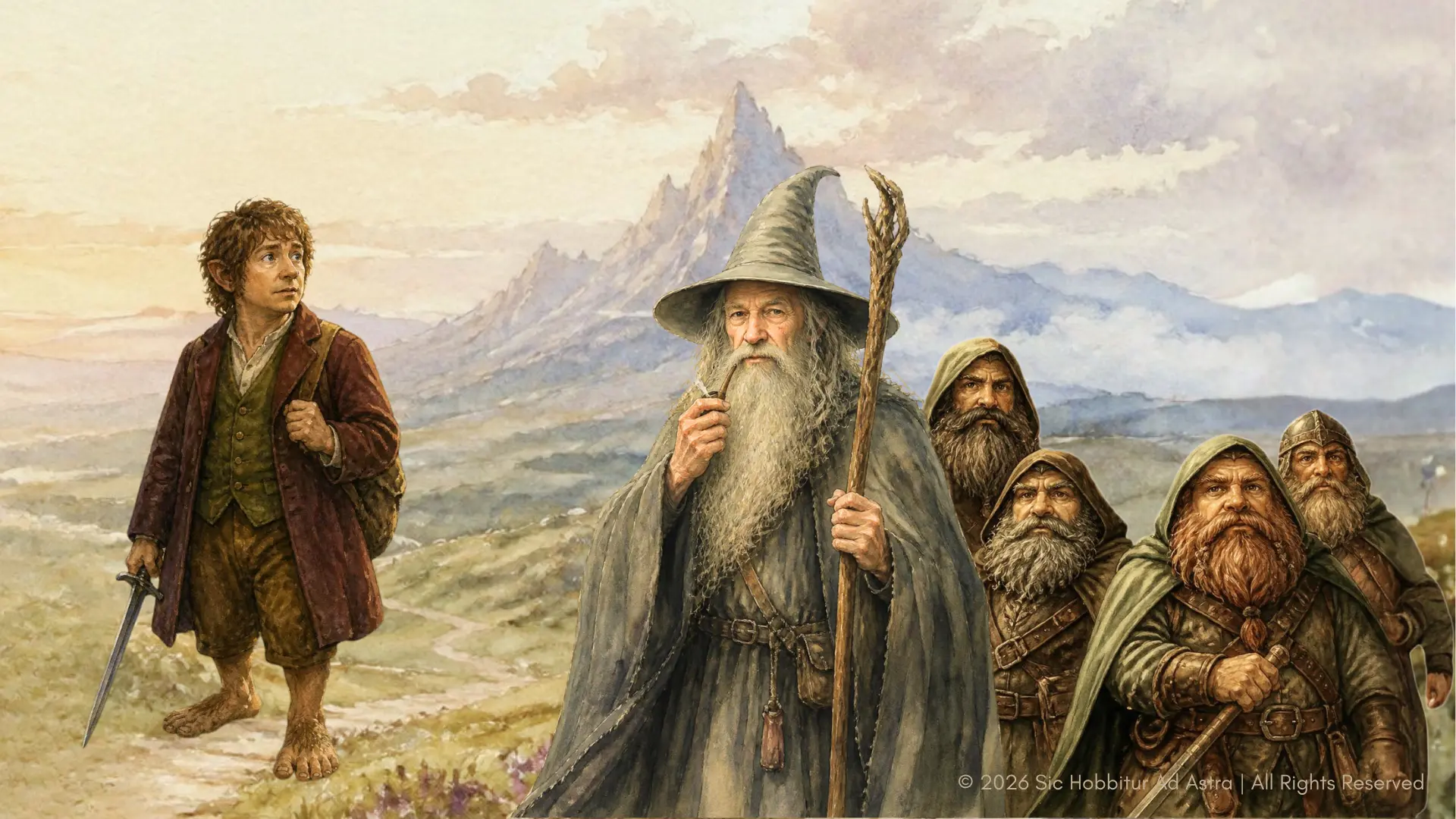
At the beginning of The Hobbit, Bilbo Baggins is far from the heroic figure he will become. He loves the comfort of his hobbit-hole, his quiet routines, his orderly life. The thought of venturing into the unknown with a company of boisterous, opinionated dwarves is deeply unsettling.
But notice what that first step actually is. It is not, at bottom, a step toward adventure—it is a step toward other people. Bilbo’s reluctance is not only fear of dragons or distance; it is the fear of throwing in his lot with a group he did not choose and cannot control. Leaving the hobbit-hole means letting others into his life. That is the truth familiar to every middle schooler: the hardest part of any new beginning is rarely the task itself, but the risk of trusting and depending on people we do not yet know.
2. Friendship Grows in Unexpected Places
Once Bilbo steps beyond the garden gate, everything begins to change. Friendship, Tolkien shows, rarely arrives where we expect it. The dwarves are not companions Bilbo would ever have chosen: they are brusque, boisterous, noisy—in short, not hobbit-like at all.
And yet it is precisely these unchosen companions who become his friends. Traveling together through danger and hardship, Bilbo is forced to set aside his assumptions and meet the dwarves as they are. The bond that forms is not built on similarity or on comfort—the two things we usually think friendship requires—but on shared trials faced side by side. Tolkien quietly overturns a lesson worth handing to students directly: our truest friends are often not the people most like us, but the ones we would never have picked, discovered only because circumstance made us walk the same road.
3. Friendship Shapes Who We Truly Are
Friendship in The Hobbit does more than provide company along the way—it changes who Bilbo is. By the end of the story he returns to the Shire aware that he has lost some of his old standing among the other hobbits, who now regard him with curiosity or mild suspicion. Once, the approval of his neighbors, his routines, and his small comforts had defined him. After the journey, those things matter less—not because he has abandoned them, but because he has grown into a fuller, truer version of himself.
And it is the friendships that did this. Through shared risk, laughter, and mutual reliance, Bilbo discovered courage, empathy, and the willingness to act beyond his own interest. It was not the adventure alone that changed him—plenty of people survive hardship and are only hardened by it. It was being changed in company, alongside others he came to love, that made the difference. We become who we are, Tolkien suggests, in the presence of the people we let matter to us.
4. Friendship Lives in the Word “Your”
Friendship in The Hobbit is never idealized. It is real—full of tension, misjudgment, and reconciliation. Bilbo stretches the truth about his encounter with Gollum, protecting his own reputation at the cost of honesty. Thorin, as the story nears its end, lets the lure of gold harden him against the very people who have stood by him. These are not small things: they are real wrongs, the kind of humanly understandable failures that any friendship has to reckon with.
The bond is not weakened by these moments—it is tested and revealed in them. A mature friendship does not merely survive the other person’s failures; it expects them, and is not scandalized by them. It has understood that error is part of any real relationship, not a betrayal of it. What it refuses is not imperfection but the alternative: preferring to be in the right, and to be recognized as such, over the person themselves.
The truest proof of this comes not in a quarrel but in an apparent betrayal. When Bilbo secretly gives the Arkenstone to Thorin’s adversaries, he seems to sell out his friend—and Thorin, in his gold-sickness, calls him exactly that. Yet it is the most faithful thing Bilbo does in the whole book. He is not abandoning Thorin; he is trying to save him, to force him back from the ruin his pride is driving him toward. He chooses Thorin’s good over Thorin’s good opinion of him—and accepts being branded a traitor as the price. This is friendship at its most demanding: the willingness to be misunderstood, even hated, rather than watch someone you love destroy himself.
And Thorin, at the last, understands. The whole novel gathers, quietly, toward the scene of his death—but it is not Bilbo’s gratitude alone that redeems it. Thorin goes first. Dying, he takes back the words he spoke in his anger and asks to part as friends: “There is more in you of good than you know, child of the kindly West.” The friend who had called Bilbo a traitor now blesses him. Only then does Bilbo answer: “I am glad to have shared in your perils, Thorin. It’s been more than any Baggins deserves.”
So the bond is sealed from both sides at once—Thorin’s repentance and Bilbo’s gratitude meeting in the same moment. As the Italian scholar Edoardo Rialti has observed, the key word in Bilbo’s reply is not perils but your. Bilbo is not grateful for the dangers themselves—they were, and remain, frightening and unwelcome. What transforms them is that they were Thorin’s dangers, shared with Thorin. “I would rather have wept with you than stayed home laughing alone,” Rialti writes.
This is the heart of what Tolkien understands about friendship, and it is worth saying plainly to students, because it runs against everything they are told about adventure. The greatest value was never the journey itself—real as that journey is—but the person who walked it beside him. The perils did not become good; they became meaningful, because they were suffered together.
Reading this, I always find myself thinking of a line the young wanderer Christopher McCandless underlined in his final days, alone in the Alaskan wild: “happiness is only real when shared.” He had gone looking for a life pared down to himself alone, and discovered—too late—that joy needs someone to share it with. Bilbo learns the same thing from the other side: that hardship, too, is only bearable when shared, and can even become something we are grateful for. Joy and sorrow seem to follow the one rule. Neither is fully itself alone.
5. Friendship Carries Us — From Bilbo to Sam
What Bilbo glimpses at Thorin’s deathbed, Tolkien would spend the rest of his life deepening. The intuition of The Hobbitreaches its full form in The Lord of the Rings, in the friendship between Frodo and Sam—where the idea that a companion gives meaning to the road is carried, quite literally, to its limit.
On the slopes of Mount Doom, when Frodo can no longer walk, Sam does not carry the burden for him—he cannot—but he carries him: “I can’t carry it for you, but I can carry you.” The sacrifice is Frodo’s to make; but it is made possible, and made bearable, only because someone chose to remain beside him to the end. Bilbo’s gratitude for shared peril becomes, in Sam, a love that shoulders another’s weight when the road itself has become unendurable.
It is no accident that Tolkien, who wrote friendship this way, lived it. His decades-long friendship with C. S. Lewis—forged in the reading circle of the Inklings—was one of the formative bonds of his life. Lewis, for his part, gave the subject its fullest reflection in The Four Loves—a book I owe more than I can say—where he set the quiet, chosen love of friendship apart from the loves we simply fall into. Their friendship was not idealized either—Humphrey Carpenter’s The Inklings records its cooling in later years—which makes it truer to what Tolkien put on the page: friendship not as effortless harmony, but as a bond worth keeping through difference, error, and distance.
In Conclusion: Why Friendship Is at the Heart of The Hobbit
This is why The Hobbit is, beneath its dragons and its gold, a book about the thing that makes any hard road worth walking. Bilbo learns it; Sam embodies it; Tolkien and Lewis lived it—imperfectly, which is the only way anyone does. The journey is never the point. The one who walks beside us is.
When I think about teaching literature, this is what excites me most: the way stories can speak to the real questions of growing up. My students might not face dragons, but they do face uncertainty, loneliness, and the search for belonging. Reading The Hobbit together becomes an encounter not just with Bilbo’s story, but a mirror for their own experience of friendship.
Bilbo’s journey shows that true friendship often grows in unexpected places, with people very different from ourselves. He learns to navigate disagreements, forgive mistakes, and offer support even when it is difficult—all lessons that resonate deeply with middle school readers. And if a book can help a young person see that friendship is worth the risk—worth the quarrels and the tears—then it’s a story worth telling, and retelling, for years to come.
Thanks for walking through these reflections with me — I’d love to hear how you’ve seen your own students connect with the theme of friendship in Tolkien’s works.
Warmly,
Chiara
Post Scriptum: A Tool for Teachers
If you’re looking for a way to explore The Hobbit with your middle school students in a structured and engaging way, I’ve created a complete teaching bundle that covers the novel from multiple angles. It includes activities for character analysis, theme exploration, creative writing, and final assessments—everything you need to guide students through Bilbo’s journey while encouraging them to reflect on the deeper meanings of the story.
You can find it here:
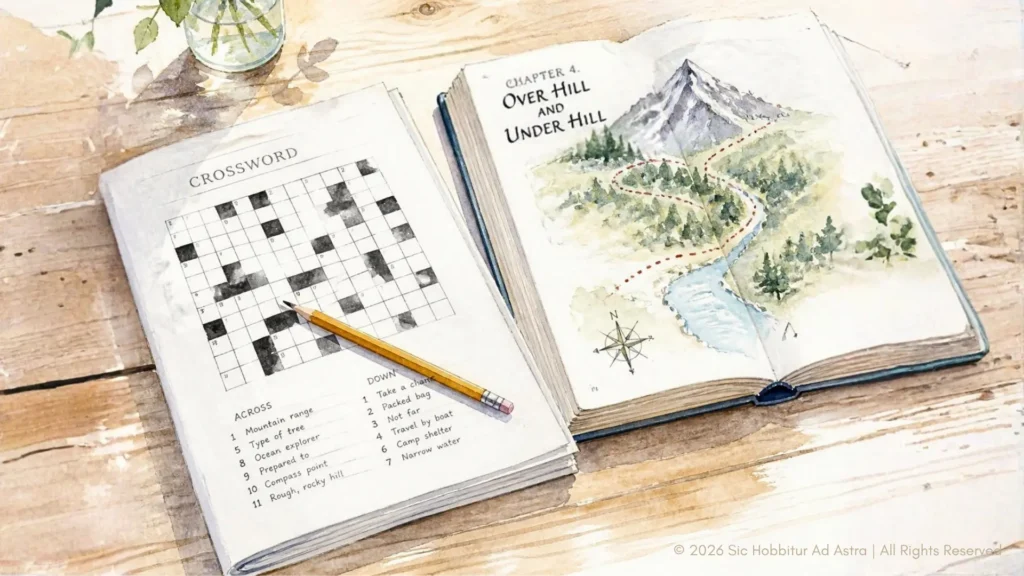
If this is your first time bringing the novel to your class, you might start with Introducing The Hobbit in Middle School: runes, literary context, and the Inklings, or step back to see the broader educational value of The Hobbit, where friendship sits alongside courage, curiosity, and moral growth. And for more creative classroom strategies, you can also check my posts on using crossword puzzles to enhance learning or a comprehensive guide to close reading the novel, chapter by chapter.